
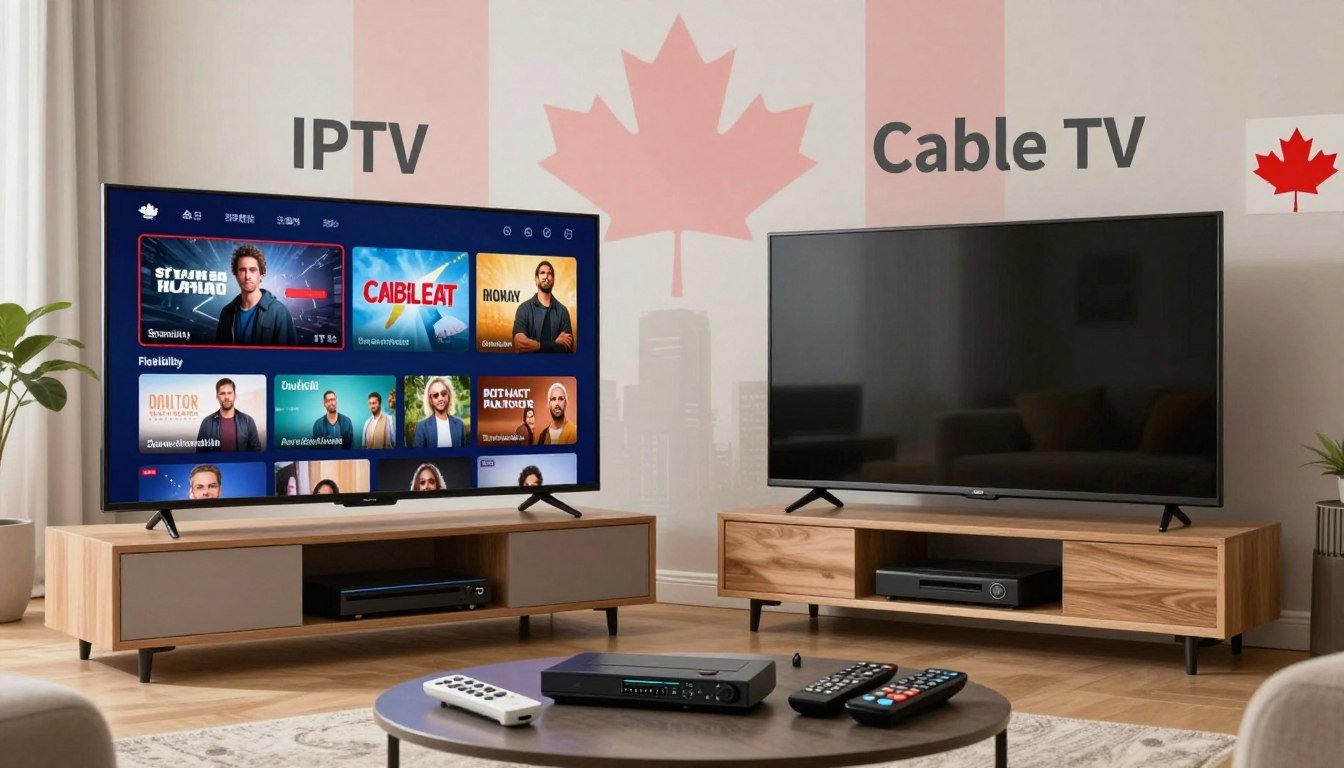




Have you ever wondered if your monthly television bill is truly worth the price, or are you simply paying for channels you never watch? As the way we consume media shifts across the nation, many households are re-evaluating their home entertainment setups. The debate regarding iptv vs cable canada options has never been more relevant for budget-conscious viewers.
For a comprehensive comparison of the top services, see our best IPTV Canada buyer’s guide.
Traditional broadcast services have long dominated our living rooms, offering reliability and familiar channel guides. However, modern digital alternatives now provide unparalleled flexibility and on-demand content that fits a busy lifestyle. Choosing the right service requires a careful look at your personal viewing habits and your monthly budget.
Understanding these differences is essential for making an informed decision in today’s crowded market. Whether you prioritize live sports or a vast library of streaming shows, finding the perfect balance is the key to a satisfying viewing experience.
Key Takeaways
- Traditional television offers stable, scheduled programming for consistent viewers.
- Modern digital streaming services provide greater control over content and pricing.
- Comparing monthly costs helps identify hidden fees in legacy service contracts.
- Internet speed is a critical factor when switching to digital-based television.
- Canadian households can save significantly by tailoring packages to specific needs.
Understanding the Landscape of Canadian Television
Navigating the modern media landscape in Canada requires understanding how viewing habits have evolved. For decades, households relied on a limited set of providers to deliver their daily news and entertainment. Today, the variety of Canadian broadcasting options has expanded, forcing viewers to rethink how they access content.
The Shift from Traditional Broadcasting
The transition from linear, scheduled television to on-demand consumption has been rapid. Previously, viewers were tethered to specific airtimes, waiting for their favourite programs to appear on a set schedule. This rigid model is quickly losing its grip on the average Canadian household.
Many families are now moving away from traditional cable packages in favour of more flexible digital solutions. This shift highlights a growing demand for control over when and where content is viewed. As a result, the market for Canadian broadcasting options continues to diversify to meet these changing expectations.
Current Trends in Canadian Media Consumption
High-speed internet penetration across the country has acted as the primary catalyst for this change. With faster connections becoming the standard in urban and rural areas alike, streaming high-definition content is easier than ever. This technological leap allows users to bypass legacy systems entirely.
Modern viewers now prioritize convenience and personalization over the traditional bundle model. They are increasingly curating their own media libraries through various digital platforms. Understanding these trends is essential for anyone looking to optimize their home entertainment setup while exploring the full range of available Canadian broadcasting options.
The Evolution of Cable Television in Canada
The story of cable television in Canada is a tale of massive infrastructure and shifting consumer habits. For many years, the way Canadians accessed home entertainment remained largely unchanged, anchored by a few dominant corporations that built the networks connecting the country.
Legacy Providers: Rogers, Bell, and Telus
The market has long been dominated by a trio of major Canadian television providers: Rogers, Bell, and Telus. These companies invested heavily in physical infrastructure, laying miles of coaxial and fiber-optic cables to reach homes from coast to coast.
Rogers established a strong foothold in Ontario and Atlantic Canada, while Bell and Telus expanded their reach through aggressive network upgrades. These providers became the gatekeepers of content, controlling both the delivery systems and the programming packages available to the average household.
The Bundle Model: Pros and Cons
To maintain customer loyalty, these companies popularized the bundle model. This strategy combines internet, home phone, and television services into a single monthly bill, offering a level of convenience that many families found hard to resist.
The primary advantage of this approach is simplicity. Managing one account with a single provider reduces administrative headaches and often results in a lower total price compared to purchasing each service individually.
However, the model has significant drawbacks. Consumers frequently find themselves paying for large channel packages that include dozens of stations they never watch. This fragmentation of value often leads to higher monthly costs for services that remain largely unused, prompting many Canadians to reconsider their traditional subscriptions.
What is IPTV and How Does it Work?
Internet Protocol Television represents a significant shift in how we consume media at home. Unlike traditional broadcast methods that rely on satellite or cable infrastructure, this technology uses your existing broadband connection to deliver content directly to your television.
Defining Internet Protocol Television
At its core, internet protocol television functions by breaking down video signals into small data packets. These packets travel across your internet network, similar to how you receive emails or browse websites, before being reassembled by a set-top box or compatible device.
This method allows for a highly interactive experience compared to legacy systems. Because the connection is two-way, viewers can request specific content on demand, which is a hallmark of modern digital TV alternatives.
How IPTV Differs from Standard Streaming Services
Many Canadians often confuse IPTV with popular streaming services like Netflix or Crave. While both rely on an internet connection, the underlying delivery architecture is quite different.
Standard platforms operate over the public internet, often leading to buffering during peak usage times. In contrast, legitimate IPTV providers typically use a managed network, which prioritizes television data to ensure a stable, high-quality broadcast experience.
| Feature | Standard Streaming | IPTV Services |
|---|---|---|
| Network Type | Public Internet | Managed Broadband |
| Content Delivery | On-Demand Only | Live & On-Demand |
| Quality Control | Variable | Guaranteed Bandwidth |
| Primary Use | Entertainment Apps | Full TV Replacement |
By choosing digital TV alternatives, users gain access to live channels that standard streaming services simply cannot provide. This distinction is vital for anyone looking to replace their traditional cable subscription with a more flexible, modern solution.
A Detailed IPTV vs Cable Canada Cost Analysis
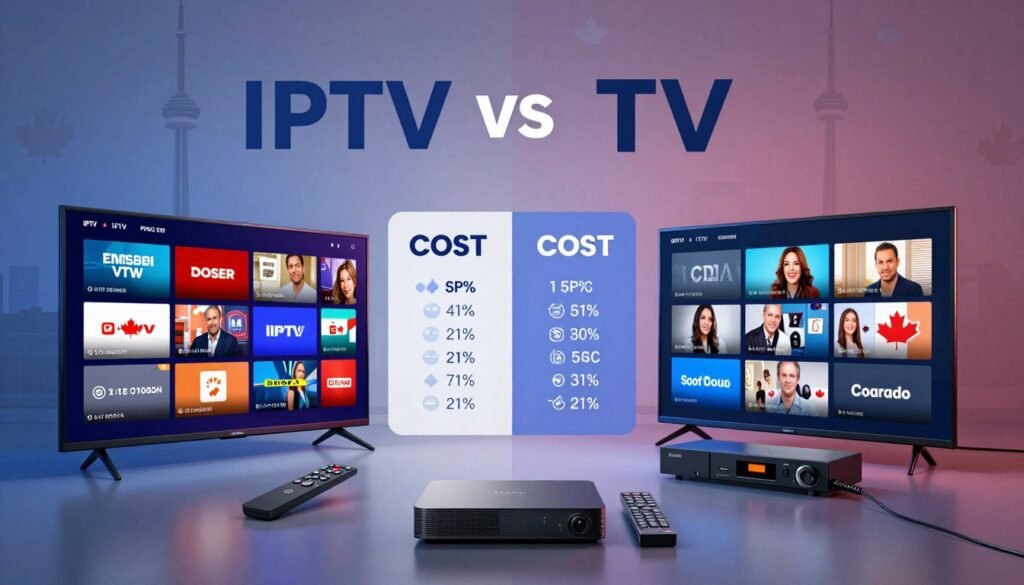
When evaluating the financial impact of your home entertainment, the debate between iptv vs cable canada becomes a central focus for many families. Making an informed television subscription comparison requires looking beyond the advertised monthly rate to see the full picture of your annual spending.
Hidden Fees and Equipment Rental Costs
Traditional cable television providers often bundle various costs that can inflate your bill significantly. Customers frequently encounter mandatory equipment rental fees for set-top boxes in every room, which adds up quickly over time.
Beyond hardware, installation charges and service activation fees are common hurdles for new subscribers. These upfront costs often create a high barrier to entry that digital-first alternatives typically avoid.
Long-term Savings Potential
The primary financial advantage of switching to internet-based services lies in the flexibility of contract-free billing. Unlike legacy providers that lock users into multi-year agreements, many modern services allow for monthly cancellations.
This freedom empowers consumers to pause or switch services based on their current budget. By eliminating long-term commitments, households can avoid the price hikes that often occur once promotional periods expire.
Subscription Tiers and Pricing Structures
Choosing the right plan depends on your specific viewing habits and how much content you actually consume. The following table highlights how different structures impact your wallet:
| Service Type | Typical Pricing Model | Hidden Costs |
|---|---|---|
| Traditional Cable | Bundled/Contract | High (Equipment/Install) |
| Standard IPTV | Tiered/Monthly | Low (Minimal Hardware) |
| Premium Streaming | Flat Rate | None |
Ultimately, a thorough television subscription comparison reveals that while cable offers a familiar experience, the financial efficiency of modern alternatives is hard to ignore. Whether you prioritize live sports or on-demand movies, understanding these costs ensures you get the best value for your money.
Comparing Channel Selection and Content Variety
When evaluating digital TV alternatives, the variety of channels and content delivery methods play a major role in your final decision. Canadian households often prioritize access to specific networks, making it vital to understand how different providers package their offerings.
Live Sports and Local News Coverage
Traditional cable providers have long held a stronghold on live sports and local news. They offer reliable, real-time broadcasts that many fans consider essential for watching major events like the NHL or local community updates.
In contrast, many digital TV alternatives provide access to these same networks through internet-based streams. While the quality is often high, viewers must ensure their internet connection remains stable to avoid buffering during critical game moments.
On-Demand Libraries and Catch-up Features
Modern television services are shifting the focus toward flexibility. Unlike traditional scheduled programming, many modern platforms include extensive on-demand libraries that allow you to watch shows on your own timeline.
Catch-up features are particularly popular among busy viewers. These tools enable you to:
- Rewind live broadcasts to catch missed segments.
- Access programs that aired within the last 24 to 72 hours.
- Browse curated content lists based on your viewing history.
Regional Restrictions and Canadian Content Requirements
Navigating the Canadian media landscape involves understanding specific regulatory frameworks. The CRTC mandates that providers include a certain percentage of Canadian content to support local creators and culture.
Furthermore, regional restrictions often dictate which channels you can access based on your physical location. While some digital TV alternatives offer broader access, they must still comply with licensing agreements that limit content distribution to specific provinces or territories.
Technical Requirements and Internet Connectivity
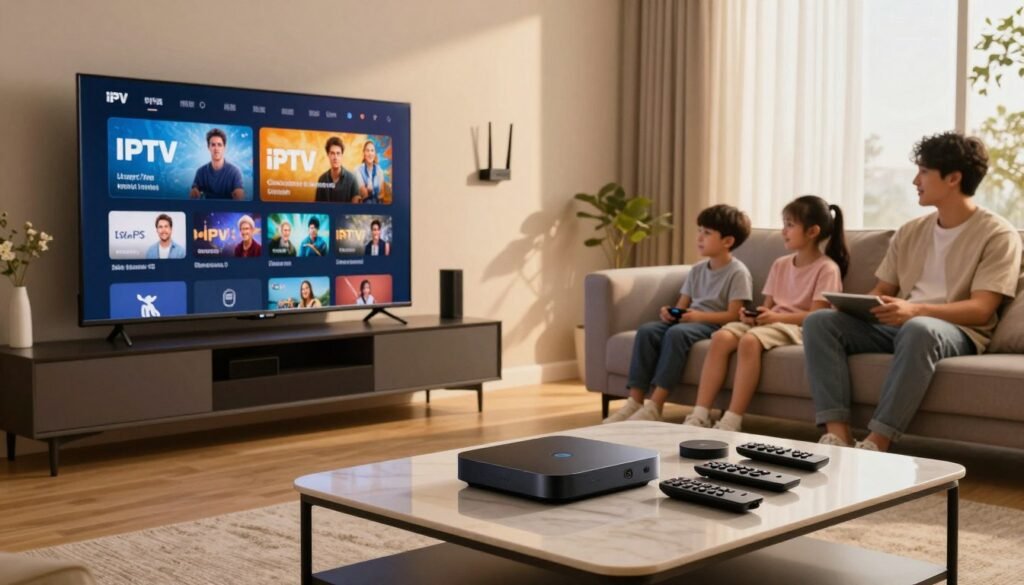
Transitioning to modern television viewing requires a solid understanding of your home network infrastructure. To enjoy a seamless experience with internet protocol television, your home must be equipped to handle consistent data streams without interruption.
Bandwidth Needs for High-Definition Streaming
High-definition content requires a stable and robust internet connection to prevent buffering. For a standard HD stream, most providers recommend a minimum speed of 5 to 10 Mbps per device. If your household plans to stream 4K content, you should aim for at least 25 Mbps per active screen.
It is important to consider the total number of devices connected to your network simultaneously. Peak usage hours in Canada often see a drop in speeds, so having a higher tier plan provides a necessary buffer for your entertainment needs.
Hardware Requirements: Set-top Boxes vs Smart TVs
Choosing the right hardware is essential for accessing internet protocol television services effectively. Many users prefer dedicated set-top boxes because they often feature more powerful processors and better software optimization than standard television interfaces.
However, modern Smart TVs come with built-in applications that simplify the setup process. While these apps are convenient, they may occasionally lack the advanced features or long-term software support found in external streaming devices.
The Importance of Stable Home Networking
A strong Wi-Fi signal is vital, but it is not always enough for high-demand streaming. Using a wired Ethernet connection is the most reliable way to ensure your stream remains stable during high-traffic periods. If you must use wireless, ensure your router is centrally located and away from physical obstructions.
| Feature | Smart TV App | Set-top Box |
|---|---|---|
| Processing Power | Moderate | High |
| Connectivity | Wi-Fi/Ethernet | Optimized Ethernet |
| Ease of Use | High | Moderate |
| Update Frequency | Low | High |
Ultimately, your choice of hardware and network configuration will dictate the quality of your internet protocol television experience. Investing in a quality router and choosing the right connection method will save you from future technical headaches.
Reliability and Service Quality Differences
Comparing the technical backbone of traditional cable against modern IPTV reveals significant differences in how your content is delivered to your living room. While both systems aim to provide seamless entertainment, the underlying infrastructure dictates how they handle peak usage times and unexpected outages.
Understanding these variations helps you decide which service aligns best with your household’s tolerance for technical interruptions. Reliability is not just about the signal reaching your screen; it is about the consistency of that signal during high-traffic periods.
Uptime and Network Stability
Traditional cable television relies on dedicated coaxial lines that are physically separated from your home internet data traffic. This dedicated bandwidth ensures that your television signal remains stable even when other family members are gaming or downloading large files.
In contrast, IPTV operates over your existing internet connection. If your local network experiences congestion or if your internet service provider (ISP) faces a temporary slowdown, your television stream may suffer. High-quality providers often mitigate this by using advanced compression, but the shared nature of the connection remains a fundamental difference.
Customer Support and Technical Troubleshooting
Legacy cable providers in Canada typically offer a more centralized approach to technical support. Because they own the entire delivery chain—from the broadcast center to the set-top box in your home—they can often diagnose and resolve signal issues remotely with greater precision.
IPTV services often involve a more complex troubleshooting process. If you encounter a problem, you may need to determine whether the fault lies with your internet provider, your home router, or the IPTV service itself. Effective troubleshooting for IPTV usually requires a basic understanding of your home network settings and hardware configurations.
Latency and Buffering Issues
Latency refers to the delay between the live broadcast and the moment it appears on your screen. Cable television generally offers lower latency, which is a significant advantage for live sports where every second counts.
IPTV is prone to buffering if your internet speed fluctuates or if the server is overloaded. While modern streaming technology has improved significantly, these minor delays can still disrupt the viewing experience during high-demand events. Choosing a stable, high-speed internet plan is the most effective way to minimize these technical hurdles.
| Feature | Cable TV | IPTV |
|---|---|---|
| Infrastructure | Dedicated Coaxial | Shared Internet |
| Latency | Very Low | Moderate |
| Buffering Risk | Minimal | Variable |
| Support Model | Centralized | Distributed |
User Experience and Interface Comparison
When performing a television subscription comparison, the user interface is often the deciding factor for many Canadian households. While channel counts are important, the ease of finding content determines your daily satisfaction with the service. A clunky, outdated menu can turn a relaxing evening into a frustrating search for entertainment.
Navigating Electronic Program Guides
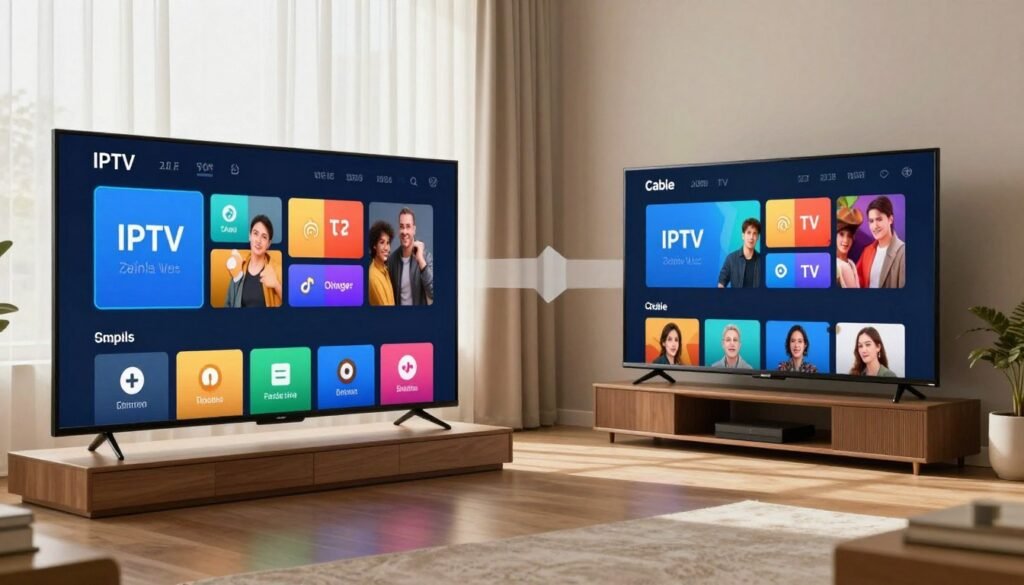
Modern Electronic Program Guides (EPG) have evolved significantly from the static lists of the past. Today’s top-tier services offer interactive grids that allow you to filter by genre, language, or air date with just a few clicks. This functionality is essential for viewers who want to manage their time effectively.
Want the sharpest picture? Learn about 4K IPTV streaming in Canada.
Browse the full IPTV channel list for Canada to see what’s available.
Compare every plan and price in our detailed IPTV pricing Canada breakdown.
Ready to subscribe? Check out our IPTV subscription plans starting from just $14.99/month.
A well-designed guide should be responsive and visually clean. Fast loading times and intuitive remote control integration ensure that you spend less time scrolling and more time watching. Whether you are browsing local news or international sports, the navigation should feel fluid and logical.
Multi-device Support and Portability
The modern viewer rarely stays in front of a single screen. High-quality services now provide seamless multi-device support, allowing you to switch between your living room television, a tablet in the kitchen, or a smartphone on the go. This level of portability is a major advantage for busy families.
By using a single login, you can pick up exactly where you left off on any compatible device. This flexibility is a core component of a modern television subscription comparison, as it reflects how Canadians actually consume media today. You are no longer tethered to a single hardware box in your home.
Personalization and Recommendation Engines
Advanced recommendation engines have changed how we discover new content. These systems analyze your unique viewing history to suggest shows and movies that align with your personal tastes. Instead of browsing aimlessly, you receive curated suggestions that help you find hidden gems within your subscription.
These engines learn over time, becoming more accurate the more you watch. By leveraging data-driven insights, providers ensure that your interface feels personalized rather than generic. This intelligent discovery is a key differentiator in the current market, making it easier than ever to enjoy your favorite programming.
Legal Considerations for IPTV Services in Canada
When choosing between various Canadian broadcasting options, it is vital to distinguish between legitimate providers and those operating in the shadows. The digital landscape is filled with choices, but not all of them operate within the boundaries of the law.
Distinguishing Authorized Providers from Grey-Market Services
Authorized Canadian television providers are those that hold valid licenses to distribute content. These companies pay for the rights to broadcast shows, movies, and live sports, ensuring that creators are compensated fairly for their work.
In contrast, grey-market services often bypass these licensing agreements. They may offer access to a vast library of content at a fraction of the cost, but they do so without the legal authority to redistribute that media. Consumers should always verify the legitimacy of a service before signing up.
Copyright Laws and CRTC Regulations
The Canadian Radio-television and Telecommunications Commission (CRTC) plays a central role in overseeing the media industry. By enforcing national standards, the CRTC ensures that all Canadian broadcasting options meet specific quality and safety requirements.
“The integrity of our media ecosystem depends on respect for intellectual property and adherence to established regulatory frameworks that protect both the consumer and the creator.”
Copyright laws in Canada are robust and designed to prevent the unauthorized distribution of protected material. When a service operates outside these laws, it undermines the entire industry and puts the end-user in a precarious position.
Risks of Using Unverified IPTV Subscriptions
Using unverified services can lead to significant security risks, including identity theft and malware exposure. Because these providers operate outside of Canadian television providers regulatory frameworks, they lack the accountability required to protect your personal data.
| Feature | Authorized Provider | Grey-Market Service |
|---|---|---|
| Content Licensing | Fully Licensed | Unauthorized |
| Data Security | High Standards | None/Unknown |
| Service Reliability | Guaranteed Uptime | Unpredictable |
| Legal Status | Compliant | Illegal |
Ultimately, the convenience of a cheap subscription is rarely worth the potential legal and technical consequences. Choosing a verified service ensures a stable, secure, and legal viewing experience for your household.
Pros and Cons of Cord-Cutting in the Canadian Market
Deciding whether to cut the cord involves weighing the freedom of choice against the complexity of managing multiple digital platforms. Many Canadians are currently evaluating if the traditional cable bundle still offers enough value for their monthly entertainment budget. As streaming services continue to gain popularity, the decision to move away from legacy providers has become a common topic in households across the country.
Flexibility and Contract-Free Options
One of the primary drivers for leaving traditional cable is the desire for true flexibility. Unlike legacy providers that often lock customers into long-term agreements, most modern digital platforms operate on a month-to-month basis. This allows users to cancel or pause their subscriptions whenever they choose without facing hefty early termination fees.
This model empowers consumers to tailor their entertainment expenses to their actual viewing habits. If you only want to watch a specific series or a seasonal sports event, you can subscribe for a short period and then cancel. This contract-free approach is a significant departure from the rigid bundles that have dominated the Canadian market for decades.

The Challenge of Fragmented Subscriptions
While the freedom to choose is appealing, it introduces the challenge of managing multiple streaming services simultaneously. When you move away from a single cable box, you may find yourself juggling several different apps to access your favourite content. This fragmentation can lead to “subscription fatigue,” where the total cost of individual services begins to rival the price of a traditional cable package.
Furthermore, keeping track of various billing cycles and login credentials requires more administrative effort than a unified cable bill. Users must often navigate different interfaces and search across multiple platforms to find specific shows or movies. While streaming services offer immense variety, the lack of a centralized guide can sometimes make the viewing experience feel disjointed.
Is Cord-Cutting Right for Your Household?
Determining if this transition is right for your home depends on your specific viewing priorities and technical comfort level. If you value customization and cost control, the shift to digital platforms is likely a smart move. However, if you prefer the simplicity of a single remote and a consolidated channel guide, you might find that traditional cable still serves your needs better.
Ultimately, the best approach is to audit your current viewing habits before making a final decision. By tracking which channels you actually watch, you can determine if streaming services can realistically replace your current setup. Taking the time to compare your total monthly costs will ensure that your entertainment strategy aligns with both your budget and your lifestyle.
Conclusion
Selecting the right television service requires a clear look at your household habits. Rogers, Bell, and Telus offer robust traditional packages for those who value stability. Digital alternatives provide modern flexibility for viewers who prefer custom setups.
You should weigh the total monthly costs against the content you actually watch. Many Canadians find that exploring various cord-cutting options leads to significant savings over time. This process helps you avoid paying for channels that remain unwatched.
Reliability remains a top priority for sports fans and news enthusiasts. Ensure your home internet connection supports high-definition streaming before making a permanent switch. A stable network prevents buffering during live events.
Take a moment to audit your current viewing patterns. Compare the convenience of a bundled cable plan with the freedom found in modern cord-cutting options. Your decision shapes how you enjoy entertainment in your living room every day.

Leave a Reply